
Type SL(N) / KL(N) — the adaptable one
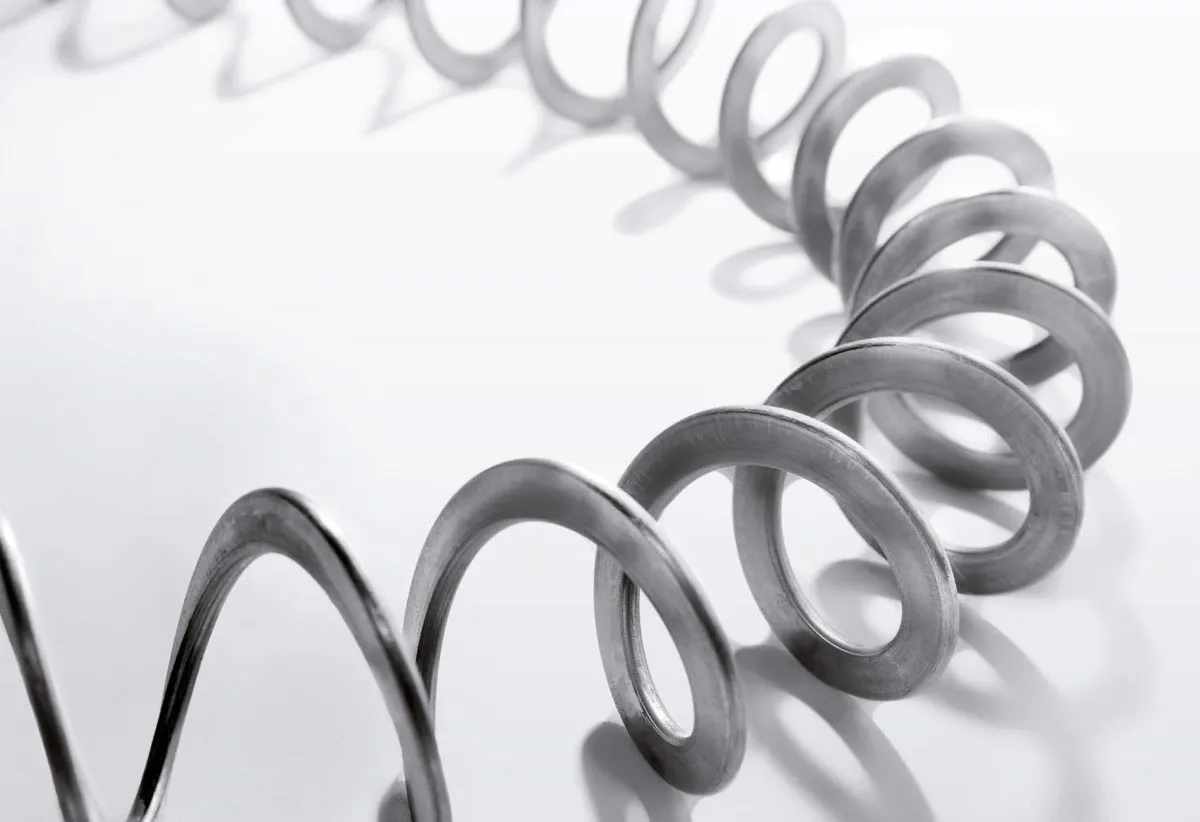
Flexible augers
For fine to medium-grained material over long and awkward routes. Guided in tube systems, routed through bends.
The flexible shaftless spiral conveying systems, with tubes in steel, stainless steel or plastic, move bulk material up to roughly 40 to 50 millimetres particle size. The uses of these tube systems reach from conveying powders through granulates, pellets and dusts to extruder material.
The real advantage lies in the routing. Using tube bends, individual conveying routes can be built that are effectively endless: where the length of one spiral type is no longer enough, the line transfers to the next section. A rigid system, by contrast, would need a transfer point at every change of direction.
Two ranges
Type SL is the standard range for routes up to about 120 metres with generous bend radii.
Type KL covers very long routes of up to 300 metres and works with considerably tighter bend radii — it is used where space is restricted.
Type ranges
| Type | max. length | Throughput | Motor rating | Particle length | Bend radius |
|---|---|---|---|---|---|
| SL (N) 55 | 100–120 m | 0,7 m³/h | max. 0,75 kW | < 5 mm | 151 cm |
| SL (N) 75 | 85–100 m | 1–3 m³/h | max. 1,5 kW | < 5 mm | 153 cm |
| SL (N) 90 | 70–80 m | 2–7 m³/h | max. 2,2 kW | < 12 mm | 157 cm |
| SL (N) 125 | 40–50 m | 5–20 m³/h | max. 3 kW | < 40 mm | 159 cm |
| Type | max. length | Throughput | Motor rating | Particle length | Bend radius |
|---|---|---|---|---|---|
| KL (N) 55 | 30–300 m | 0,5 m³/h | 0,37–4 kW | < 5 mm | 52 cm |
| KL (N) 75 | 30–300 m | 3 m³/h | 0,37–5,5 kW | < 5 mm | 65 cm |
| KL (N) 90 | 15–150 m | 4 m³/h | 0,37–5,5 kW | < 12 mm | 120/160 cm |
| KL (N) 125 | 10–100 m | 10 m³/h | 0,55–5,5 kW | < 45 mm | 120/160 cm |
(N) denotes the stainless steel version. All figures are non-binding guide values — the binding design can only be made once the material, the route and the requirement profile are known.
The system in service
How does your route run?
A sketch of the conveying path with lengths, bends and height difference is enough to start.