
Energy
Conveying technology for heating and biomass power plants
In power plant operation the conveying system sits between the fuel store and the boiler. If it stops, the plant stops.
Applications in energy generation are shaped by two requirements that sharpen one another: high throughput at very high availability. A system running 8,700 hours a year forgives no weak point.
Our longest vertical conveyor to date measures 28 metres and works in a German heating plant moving 80 to 100 m³ of biomass per hour. We have built horizontal runs of up to 36 metres with a single spiral and one gear motor — every transfer point saved is one fault source fewer.
The range of fuels reaches far beyond hog fuel. Sewage sludge, reject and refuse-derived fuels are sticky, fibrous and vary sharply in consistency. For these materials the clear cross-section of the shaftless spiral is not a convenience, it is the condition for conveying them at all.
At the end of combustion comes the ash: highly abrasive and, depending on the plant, still hot. Here wear protection and heat-resistant construction decide service life.
Typical materials — and what makes them difficult
- Biomass for boiler feedinghigh throughput in continuous operation
- Sewage sludge and rejectsticky, fibrous, sharply varying moisture
- Refuse-derived fuel (RDF)heterogeneous composition with film content
- Ashhighly abrasive, discharged hot in part
Tasks we solve here
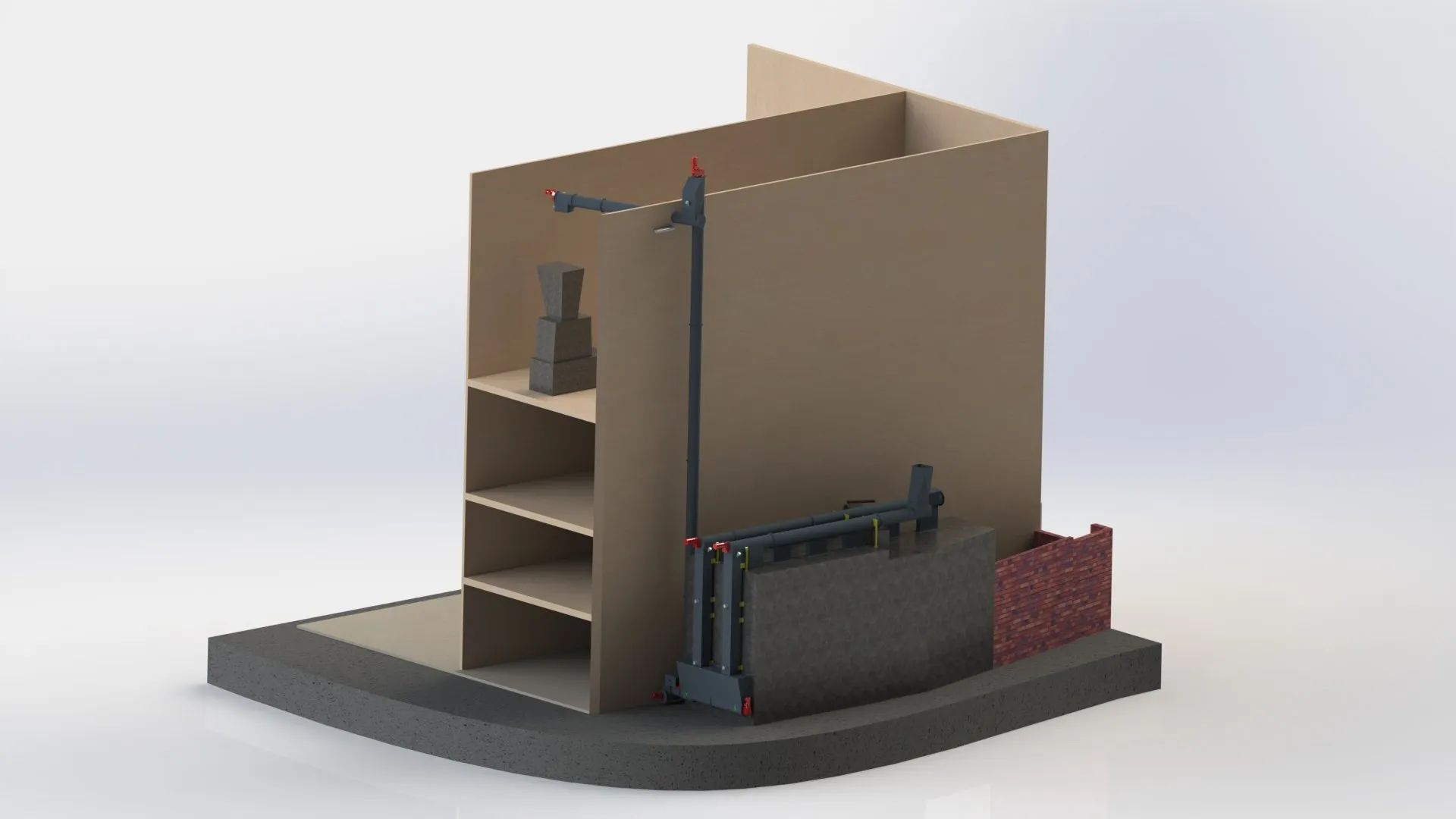
- Conveying systems for heating and biomass power plantsHigh throughput at very high availability — our longest vertical conveyor measures 28 metres.
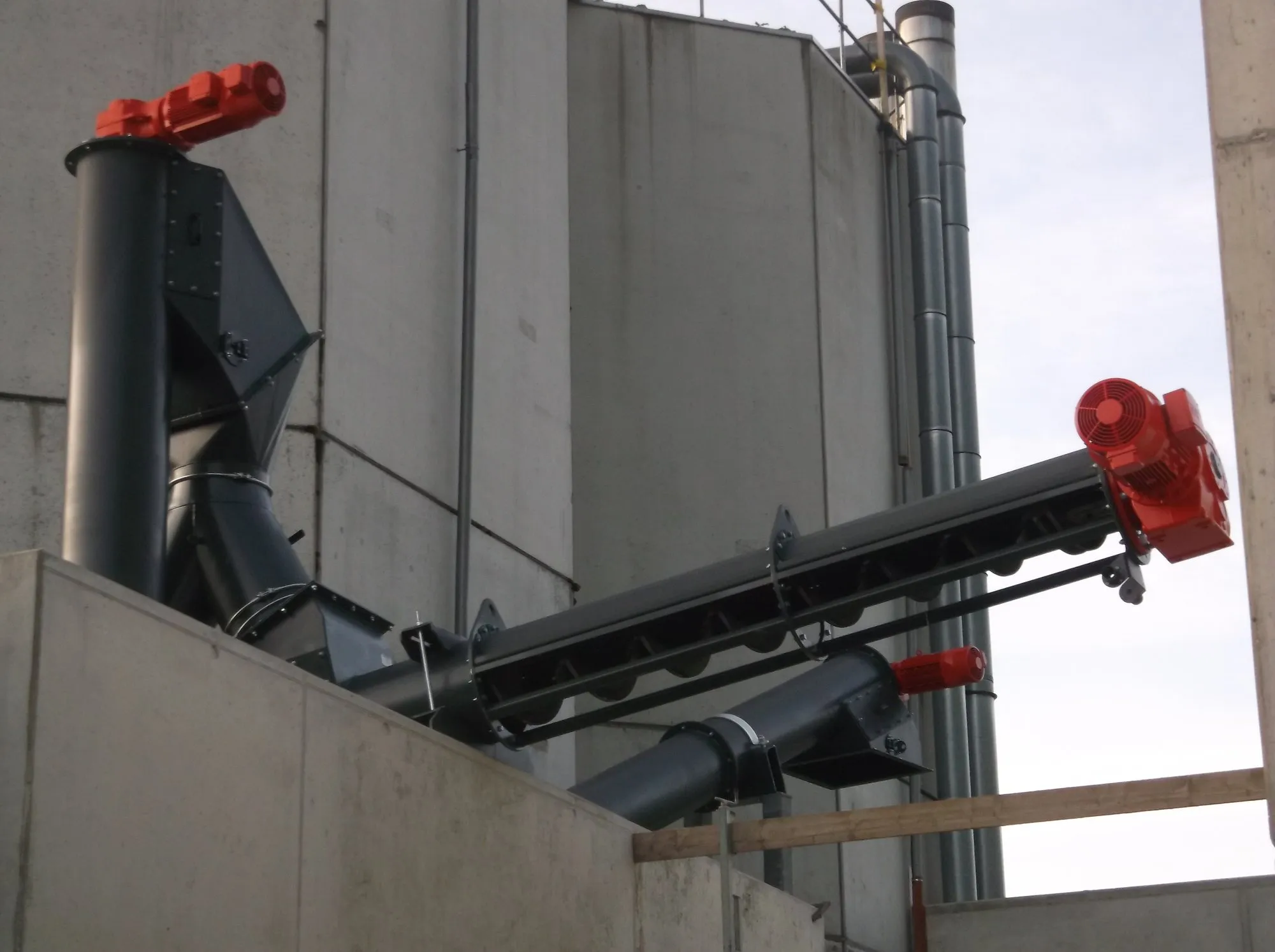 Conveying systems for wood gasification plantsConveying technology that takes the gasification process into account — fuel quality decides reactor operation.
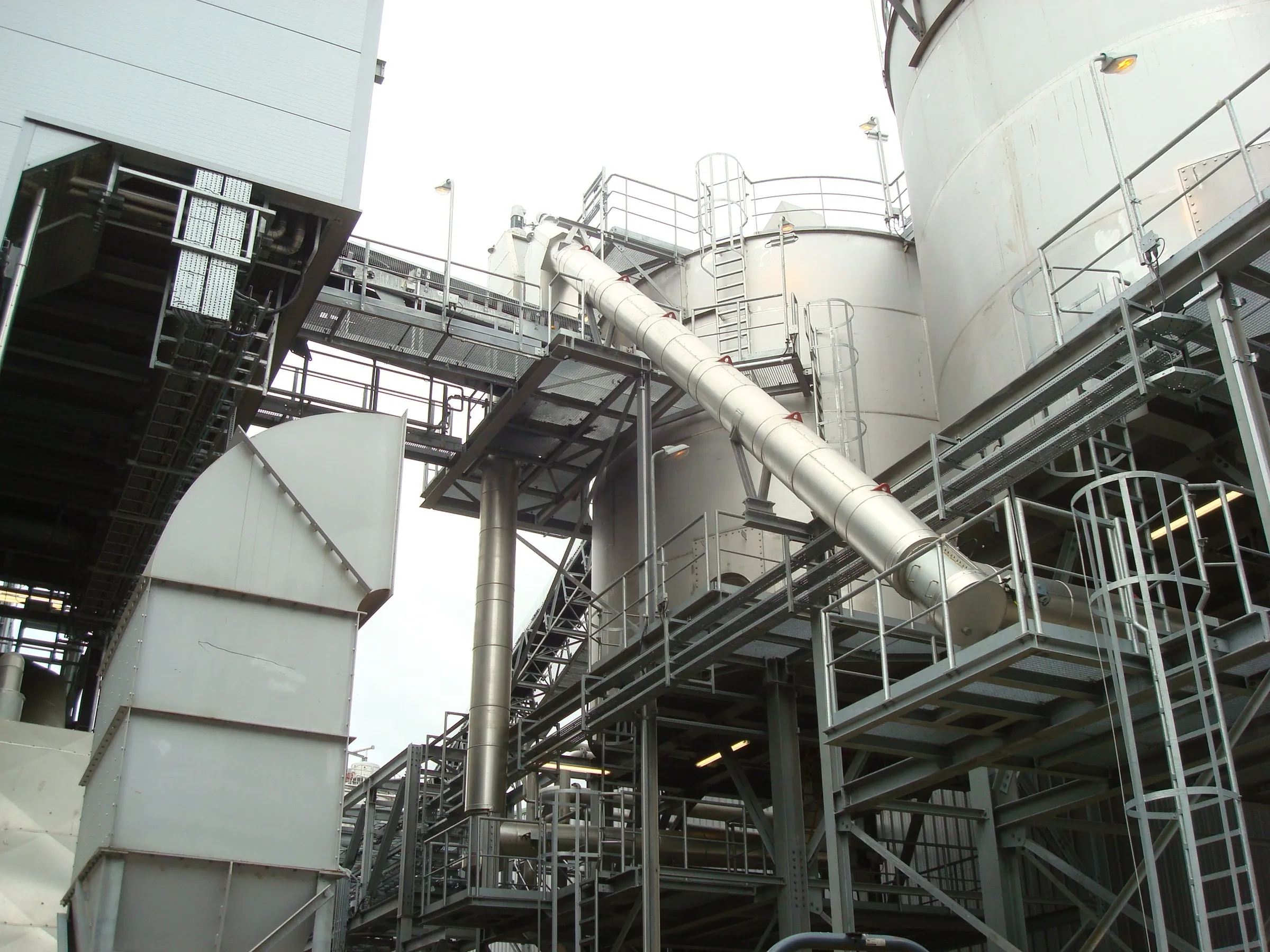 Sewage sludge, reject and refuse-derived fuelsSticky, fibrous material of sharply varying consistency — the task conventional screw conveyors typically fail at.
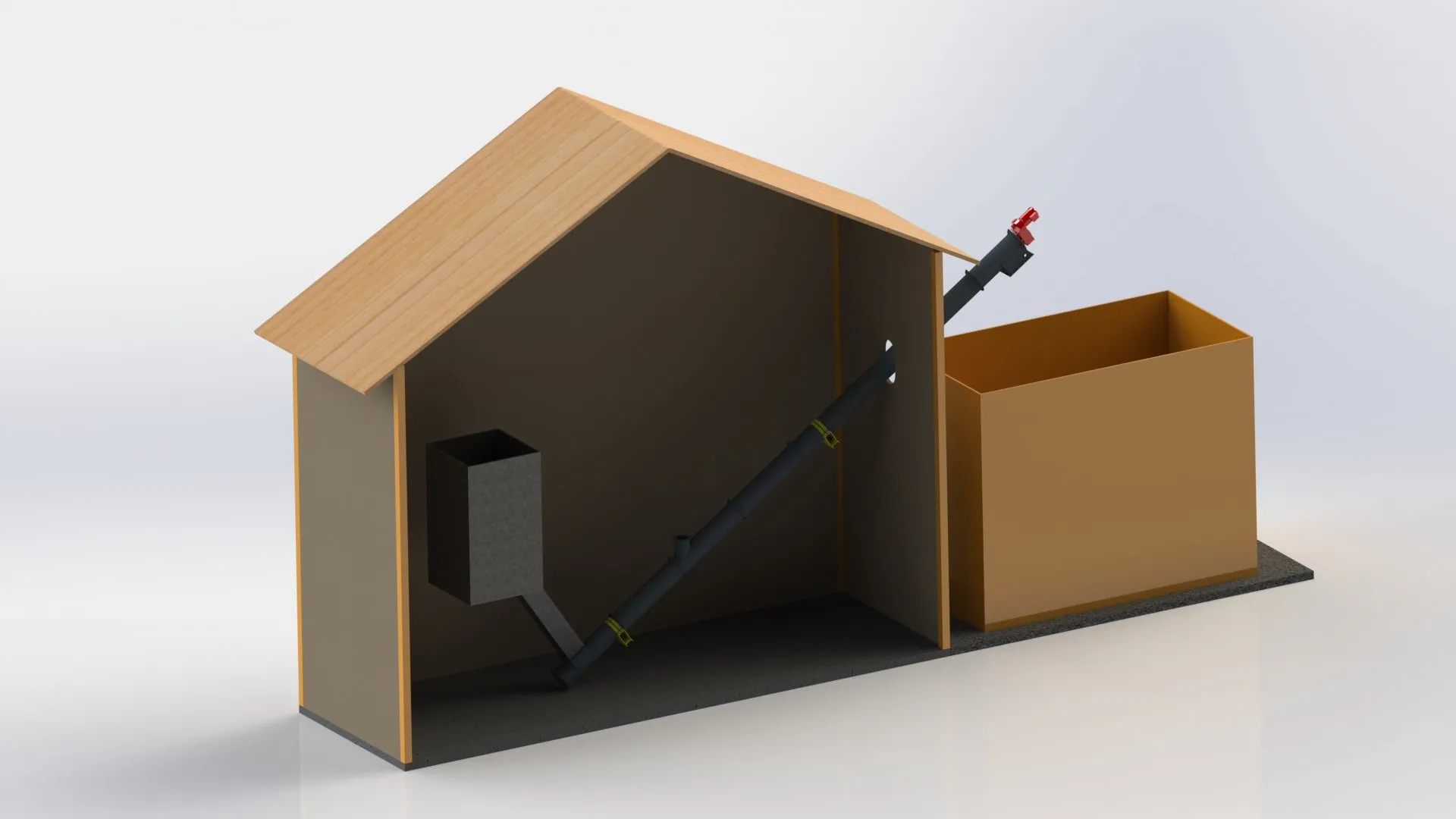 Ash conveyorsA highly abrasive medium at elevated temperature — wear protection and heat-resistant construction decide service life.
Häufige Fragen
What throughput do boiler feeding systems reach?
Up to 600 m³/h depending on size and bulk density. One vertical system built to 28 metres delivers 80 to 100 m³ of biomass per hour.
Is the shaftless spiral suitable for sewage sludge?
Yes, that is one of its classic applications. Sewage sludge is fibrous and sticky — material that wraps around a centre shaft. Without a shaft the cross-section stays clear. Depending on consistency we build tube or trough conveyors with a matching lining.
Your task in energy?
Describe your material and your route — we normally reply within one working day.